



Long before Nova Scotia had a reputation for craft beer or artisan cider, it had grapevines. The Annapolis Valley is Canada’s oldest wine-growing region, with roots that trace back centuries. The earliest European settlers noticed something special about the land: this cool, tide-swept valley, cradled between two mountain ranges and warmed by the Bay of Fundy, was made for growing grapes.
Today, the Valley is home to over a dozen wineries clustered mostly around Wolfville, Grand Pré, and the Gaspereau Valley, with a handful more tucked into the western end near Bear River. Together they form one of Atlantic Canada’s most rewarding wine regions to explore. Nova Scotia wine has its own identity: crisp, cool-climate whites, elegant sparkling wines, and a homegrown appellation launched in 2012, Tidal Bay, that exists nowhere else on earth.
Whether you’re planning a full day of tastings or just want to stop at one or two Annapolis Valley wineries on your way through, here’s what you need to know.
What Makes Annapolis Valley Wine Different
Nova Scotia sits at the edge of what’s viable for grape growing, and that’s exactly the point. The province’s cool maritime climate, long autumn ripening season, and mineral-rich soils produce wines with bright acidity and restrained, elegant character rather than the big, jammy fruit you’d find further south. The signature grape is L’Acadie Blanc, a hardy hybrid that thrives in the cold and forms the backbone of Tidal Bay, Nova Scotia’s official wine appellation. It presents as a crisp, aromatic white designed to be a true expression of place, similar to how Chablis represents its region in France.
The Valley has also become internationally recognized for its traditional-method sparkling wines. Cool nights and a long, slow-growing season create the exact conditions that Champagne producers spend fortunes chasing, and more than one Nova Scotia bubbly has turned heads in blind tastings against the real thing.
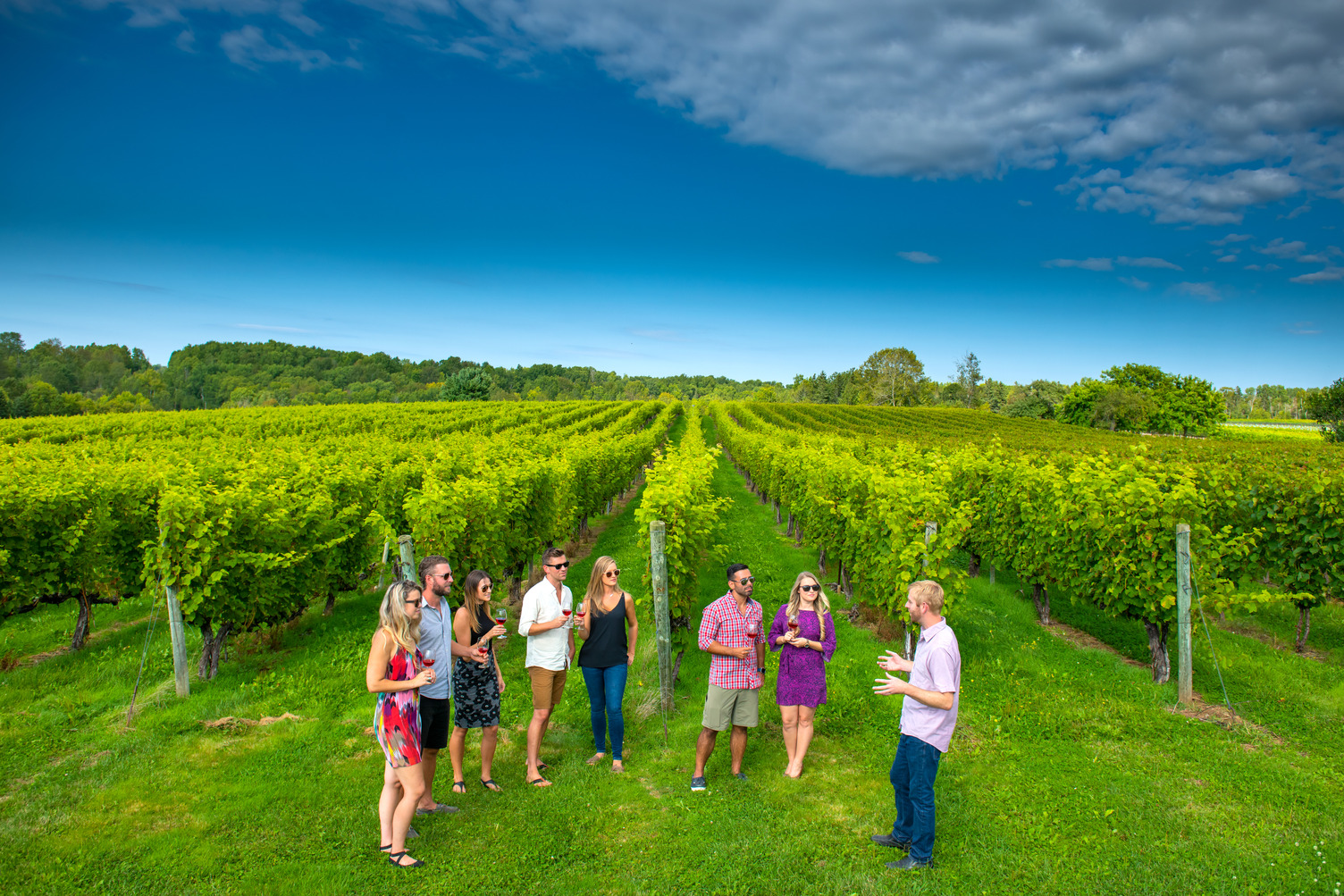
Avondale Sky Winery. Photo Credit: Tourism Nova Scotia / Photographer: Scott Munn
All of the Annapolis Valley Wineries
Domaine de Grand Pré
Domaine de Grand Pré, founded in the late 1970s, is considered the grandparent of the modern Nova Scotia wine industry and offers an on-site restaurant (Le Caveau) overlooking the vineyard and the nearby Grand Pré UNESCO World Heritage Site.
Benjamin Bridge
Benjamin Bridge, tucked into the Gaspereau Valley’s cool microclimate (and a personal favourite of ours), has built an international reputation for its sparkling wines, including the widely loved Nova 7, a lightly sparkling, aromatic blend that’s become something of an unofficial taste of Nova Scotia summer.
Luckett Vineyards
Luckett Vineyards is a big hit with tourists, and is instantly recognizable for the bright red phone booth planted in the middle of the vines (it’s a genuinely working phone booth that offers free calls anywhere in North America) paired with sweeping views over the Gaspereau Valley and a lunch menu built around local ingredients.

Luckett Vineyards. Photo credit: Tourism Nova Scotia / Photographer: Acorn Art Photography
L'Acadie Vineyards
L’Acadie Vineyards is Canada’s first certified organic winery and a great stop for anyone curious about biodynamic and low-intervention winemaking, with a laid-back tasting room and a strong focus on their namesake grape.
Avondale Sky Winery
Avondale Sky Winery is worth a visit for its story alone: the wine shop is housed in a 180-year-old former church that was moved 40 kilometres over the world’s highest tides to its current site.
Gaspereau Vineyards
Gaspereau Vineyards sits on the south-facing slopes of the Gaspereau Valley and has built its reputation on outstanding Rieslings alongside fruit-forward, terroir-driven whites and earthy reds, making it a favourite stop for visitors chasing a true taste of place.
Lightfoot & Wolfville
Lightfoot & Wolfville offers one of the Valley’s more architecturally striking tasting rooms, along with certified organic and biodynamic vineyards and panoramic views toward the Minas Basin. A favourite of ours here is the Ancienne Chardonnay, which we love to savour along with a leisurely lunch.

Lightfood & Wolfville. Photo Credit: Tourism Nova Scotia / Photographer: Destination Canada
Blomidon Estate Winery
Blomidon Estate Winery, set on a quiet ten-acre property on the shore of the Minas Basin near Canning, is a bit of a well-kept secret compared to some of the bigger names in the Valley. Its dry sparkling wines and award-winning Chardonnay and l’Acadie Blanc pair beautifully with a patio overlooking the vineyard and the Bay of Fundy beyond.
Mercator Vineyards
Mercator Vineyards, just east of Wolfville and adjacent to the Grand Pré National Historic Site, occupies a bluff overlooking the historic Acadian dykelands at the point where the Cornwallis River meets the tidal Minas Basin. The winery leans into old-world wine styles and an intimate, unhurried tasting experience, with wine flights and small bites served in a fully restored, 200-year-old farmhouse.
Planters Ridge
Planters Ridge, one of the newer wineries in Port Williams, is planted on fields first cultivated by the New England Planters in the 1700s and offers sweeping views over the Minas Basin alongside its artisanal small-lot wines.
1365 Church Street Vineyard & Winery
1365 Church Street Vineyard & Winery, also in Port Williams, is a working farm and boutique winery known for its flower gardens, bicycles scattered around the grounds, and sweeping views of the Wellington Dyke, North Mountain, and Cape Blomidon. The property is especially known for its reds, aged three to five years in a climate-controlled barrel cellar, and the winemaking family is often on-site to walk visitors through a tasting themselves.

1365 Church Street Vineyard & Winery. Photo Credit: Tourism Nova Scotia / Photographer: Lumi Studios
Beausoleil Farmstead
Beausoleil Farmstead, is another located in Port Williams, and is a small, family-run farm winery and cidery where the owners Melanie and Jake Eelman turned their own land into a working vineyard, crafting artisanal small-lot wines and distinctive “vinous ciders” (cider and wine blends) that highlight Annapolis Valley fruit.
Sainte-Famille Wines
Sainte-Famille Wines, based in Falmouth at the eastern edge of the Valley, is best known for its Marechal Foch and l’Acadie Blanc, and remains one of the longer-standing family wineries in the region.
Bent Ridge Winery
Bent Ridge Winery, in Windsor Forks across from Ski Martock, is one of the closest wineries to Halifax and doubles as a small-batch craft brewery and restaurant, with a Latin-inspired menu, live music, and a patio built for lingering. It makes for a natural first or last stop on a Valley wine trip (depending on which direction you’re travelling).
Wineries on the West End of Annapolis Valley
Head west from the Aurora Inn, and along the way you’ll find a small cluster of wineries that offer a quieter, more off-the-beaten-path wine experience for travellers heading toward Digby. Bear River Vineyards grows in a cooler microclimate on steep, south-facing terraces that form a natural sun-trap, producing standout Baco Noir and Pinot Noir from a site where some of the province’s oldest grapevines were first planted in the 1600s. Casa Nova Fine Beverages, formerly known as Annapolis Highland Vineyards, is one of the oldest properties in the Bear River East area and offers a complimentary tasting as part of a tour of its vineyard and winery. Beavercreek Winery, near Lawrencetown, takes a different approach, specializing in more than twenty varieties of fruit wine made from peaches, raspberries, plums, apples, and pears grown throughout the Valley.

Bear River Vineyards. Photo Credit: Tourism Nova Scotia / Photographer: Rove Productions
Planning your Winery-Hopping Day in the Annapolis Valley
Most Valley wineries are open for tastings daily through the warmer months, with some scaling back to weekends or by-appointment visits in the off-season, so it’s worth checking ahead if you’re planning a winter or early spring trip. Tasting fees are generally modest, and many wineries offer flights that let you sample several pours side by side.
Because the wineries are spread along a fairly compact stretch of highway and back roads between Wolfville and Grand Pré, with the Gaspereau Valley just a short detour south, it’s entirely possible to visit three or four in a single afternoon without feeling rushed. If you’d rather not drive between stops, seasonal guided tours (including a hop-on, hop-off bus option based out of Wolfville) handle the logistics and the designated driving for you.
A few practical tips: book restaurant tastings and vineyard lunches in advance during peak season, bring a light jacket even in summer since vineyard patios can be breezy, and pace yourself! A flight at every stop adds up faster than you’d expect.
Pairing Wine With the Rest of the Valley
Part of what makes wine touring here so appealing is how easily it folds into everything else the Valley offers. Many wineries sit within a short drive of farm stands, cheese producers, and orchards, so a day that starts with a tasting flight can easily end with a farmers’ market stop or a cider tasting a few kilometres down the road. Fall is an especially rewarding time to visit, when the vines are heavy with fruit and the surrounding hillsides are turning gold and crimson, but the Valley’s wine country rewards a visit in any season.
For more of what to do/see/eat while you’re here, see our other blog posts:

Blomidon Estate Winery. Photo Credit: Tourism Nova Scotia / Photographer: Dean Casavechia
Frequently Asked Questions About Annapolis Valley Wineries
How many wineries are in the Annapolis Valley?
There are more than a dozen wineries in the eastern Valley around Wolfville and Grand Pré, with a few more in the western Valley near Bear River. This makes the Annapolis Valley home to about half of Nova Scotia’s wineries.
What is Tidal Bay wine?
Tidal Bay is Nova Scotia’s official wine appellation, a crisp, aromatic white wine made primarily from cold-hardy grapes like L’Acadie Blanc. It’s designed to reflect the province’s cool coastal terroir and is produced by multiple wineries across the region, each with their own take on the style..
Do I need reservations to visit Annapolis Valley wineries?
Tasting room walk-ins are generally welcome, but reservations are recommended for guided tours, vineyard restaurant meals, and larger groups, especially during the busier summer and fall months.
Can I visit Annapolis Valley wineries without a car?
It’s possible with a guided tour or hop-on, hop-off bus service based out of Wolfville, but a car gives you the most flexibility, since many wineries are along quieter back roads between towns. Make sure you have a designated driver if you make a full day of it!
What is the best time of year to visit the wineries?
Most tasting rooms are busiest and have the fullest hours through the summer. Fall brings harvest activity and vibrant foliage, making it a favourite time for many visitors, while a quieter winter or spring visit can mean a more relaxed, personal tasting experience.
Looking for an Annapolis Valley hotel while you explore the wineries? Stay with us at the Aurora Inn in Kingston; you’re centrally located for a day of wine touring in either direction along the Valley. Ask our front desk team for winery recommendations and the best route for the wineries you’d like to visit.

Sarah is a co-owner of the Aurora Inn. She’s passionate about living in Nova Scotia’s Annapolis Valley and being active in her hometown of Kingston. Apart from running the Aurora Inn, she is also a founder of the Kingston Farmers Market.